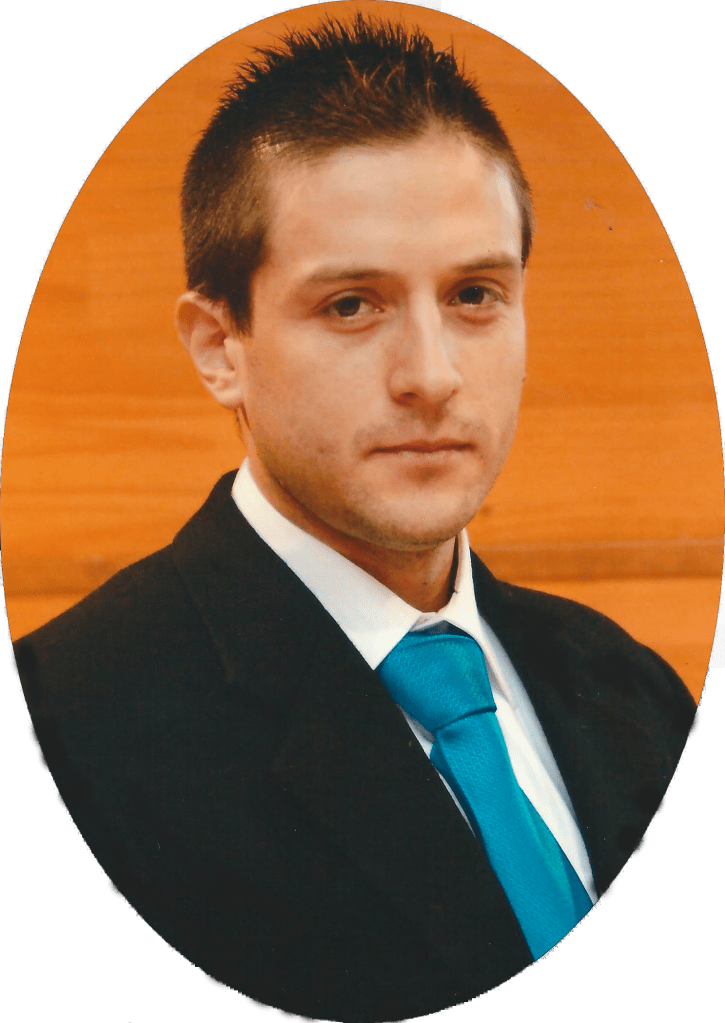
DIEGO RODRIGUEZ INZUNZA Bachelor in Education – Physical Education Teacher
Born in the city of Concepción, Chile, in 1987.
Started training karate at the age of 6.
Graduated in Educational Sciences in 2012.
Graduated as a Physical Education Teacher in 2013.
Instructor at Seishinkan Budō School HQ between 2012 and 2017.
Moved to Sweden in 2017.
Join Internationella Engelska Skola Company, Älvsjö, in 2018.
Became Head of the Physical Education Department in 2019.
Established the Seishinkan Budō School in Sweden in 2021, continuing his family’s legacy to this day.
It’s my conviction that martial arts have the power to influence people’s lives and make them useful to society, regardless of their field of practice, and it’s even more powerful when combined with formal education.
What one may experience and acquire through martial arts transcends mere techniques; it encompasses numerous human and spiritual dimensions. This includes exhibiting courtesy to demonstrate respect for one’s opponent, putting in the utmost effort to achieve a goal, focusing intently on a particular technique or movement, and utilising each moment to cultivate a purified mind. Furthermore, it involves the qualities of perseverance and endurance, achieved through the repetitive practice of the same techniques for the purpose of improvement and personal growth. The significance of “persistence is power” cannot be understated, as concentration becomes essential at critical moments, and perseverance empowers one to persist even when faced with adversity. Ultimately, the true strength lies in the ability to conquer oneself, rather than merely surpassing others.
This has been and will continue to be the foundation around which I pursue my professional career”
Born into a family with a strong tradition in the field of Education, Sports and Physical Activity as well as Martial Arts, he started at an early age to stimulate specific skills to work among people at his parents’ martial arts development center (Seishinkan Budō School) in the city of Concepción, Chile, a place where instructional tasks were assigned to lead groups of different ages. This nurturing environment not only allowed him to develop his own proficiency in martial arts but also instilled in him essential qualities such as leadership, empathy, and communication. As he guided children and young adults through various forms of self-defense and physical training, he became acutely aware of the impact that proper mentorship can have on an individual’s self-esteem and personal growth. The experience gained from these formative years played a determinant role in his future professional career options, ultimately shaping his aspirations to blend his passion for education and sports into a meaningful contribution to society. Through these early interactions, he learned how to inspire others, fostering a love for physical activity and promoting healthy lifestyles which he continues to advocate for to this day.
Graduated in 2013 from the “Universidad San Sebastián” www.uss.cl/en as a Bachelor in Education and Physical Education Teacher, has since then been involved in daily work with children, adults, and seniors in the fields of education, physical activity, health promotion, and competition.
Simultaneously with his academic development, managed to sustain a successful career as an active karate athlete, representing his Alma Mater in multiple championships at the regional, national, and international levels (most notably the Okinawa Rengokai Karate & Kobudō World Karate Championships, held in Buenos Aires, Argentina, 2010). His career earned him an athletic scholarship and earned him the “SAN SEBASTIAN SPIRIT AWARD” for three consecutive years, awarded by the educational institution to outstanding students who successfully develop their academic and athletic careers.
Driven by the passion for excellence, it’s the experience of achieving success and becoming someone who contributes to society by using these tools that he’s committed to pass to the next generation. He firmly believes that the knowledge and skills acquired through dedication and hard work not only empower individuals but also foster a sense of responsibility toward the community. In doing so, he aims to share these valuable insights with those who travel similar paths in formal education settings as well as through the impact of Seishinkan Budō School in Sweden, his parent’s legacy. This commitment transcends mere instruction; it involves inspiring young minds to embrace their potential and use their capabilities to affect positive change, thus creating a ripple effect of growth and empowerment throughout society.
Overview of main Roles to Date
PHYSICAL EDUCATION & HEALTH TEACHER – Graduated in 2013, Universidad San Sebastián. Concepcion, Chile. https://www.uss.cl/en/
HEAD OF THE PHYSICAL EDUCATION DEPARTMENT & PHYSICAL EDUCATION TEACHER – IES Älvsjö, Stockholm Sweden. 2018 to the present day.
SEISHINKAN BUDŌ SCHOOL – CHIEF INSTRUCTOR: since its official opening in 2021 to the present day in Stockholm, Sweden.
PERSONAL TRAINER & FITNESS ADVISOR in the Swedish fitness company Pulse & Träning (currently STC), Stockholm, Sweden. 2018 – 2021
COACHING PROJECT MANAGER – CYS WORLDSPORTS, focused on developing human capital in the Biobío Region, Chile.
MAIN ROLE DESCRIPTION
As the Head of the Department of Physical Education,Responsible for developing and implementing the curriculum according to Swedish school lawwith a main emphasis on the units of movement, safety on land, water, and contact with nature.
As a physical education teacher, and through his teaching ethic based on his personal experience in martial arts, seeks to instill in his students a sense of commitment to society and the development of skills beyond the merely academic, using physical activity as a tool for success in their future projects.
Develop & implement the “Ice Rescue Skills” projectas part of the Physical Education unit, Land and Water Safety, providing students with the opportunity to develop the skills needed to interact safely with Sweden’s challenging natural winter environment.
Developed & Implemented the CPR Unit Certificationat the school for all staff and Year 9 students. Also taught CPR to a younger group of students in preparation for their certification.
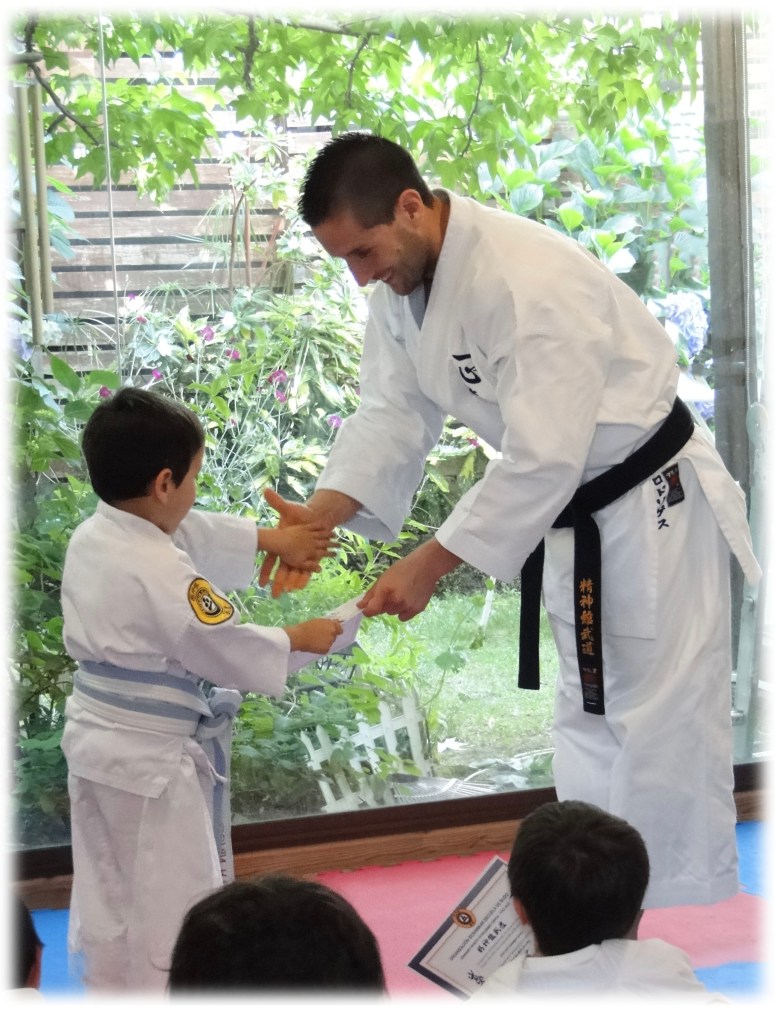
As Chief Instructor at Seishinkan Budō School Sweden, provides the space to students of all ages to explore the use of martial arts in their personal lives. From adults, who can train for health development purposes and cultivate it as a deep philosophy in their lifes, to children whose parents trust our work to support their children in becoming successful persons with an strong sense of purpose in the future.
As a personal trainer and sports consultant,develops postural correction and injury prevention programs for adults and seniorsand formulates specific training programs for junior tennis players.
Initiate the systematic training in Karate-do (空手道) at the age of six at the Okinawa Isshinryū Seishinkan Organisation, whose Hōnbu dojo is located to this day in the city of Concepción, Chile, under the guidance of his parents, Magaly Inzunza Sensei (Isshinryū Karate Yondan, 4th dan) and Osvaldo Rodríguez Sensei (Isshinryū Karate Hashi-dan, 8th dan and Tokushinryū Kobudō Nana dan 7th dan).
As full-time Martial Arts instructors and Physical Education teachers, they identified the potential of karate (空手) as a non-formal educational tool that supported his child’s development at school, university and later in his professional journey.
Driven by a deep sense of commitment to the ideal of giving back through martial arts and thanks to his professional training as a teacher, the use of martial arts as a tool for self-development has become one of the pillars and guiding principles of Diego Rodríguez Sensei, who remain committed to pass this to the next generation alongside the development and promotion of Okinawan Karate and Kobudō.
We invite the reader to briefly delve into his martial career to date.
Domo Arigato Gozaimasu !
どうもありがとうございます
1992 – Concepcion, Chile: Start training Isshinryū Karate dō (一心流空手道) under the guidance of Osvaldo Rodriguez and Magaly Inzunza sensei.
2008 – Concepcion, Chile: Promoted to Shōdan – 1st dan black belt, in Isshinryū Karate & Kobudō 一心流空手古武道. Formally begins to fulfil duties as an instructor at the Seishinkan Hōnbu Dojo, a task he had been performing for several years as an assistant instructor, being responsible for supporting fellow dojo members in their respective martial journeys.
2008 – 2013 Concepcion, Chile: while training to become a Physical Education Teacher, he served as an instructor and leader of the San Sebastián University sports karate team, to which he also was part as an athlete. The latter earned him a sports scholarship for the outstanding athletic record.
2014 – Concepcion, Chile:Promoted to Yōndan, 4th dan black belt, in Isshinryū Karate & Kobudō 一心流空手古武道, receiving on this occasion his Menkyō Kaiden免許皆伝 (License of total transmission, Instructor) in Isshinryū under the OIKKA (Okinawa Isshinryū Karate & Kobudō Association)of Grand Master Angi Uezu (1935 – 2024). The results of the research “Need and relevance of sustained leadership in martial arts organisations” were presented to the examination panel and students who attended the occasion.
2014 – Stockholm, Sweden: while visiting the country, the first steps to open Seishinkan Budō School and start teaching Isshinryū karate are taken. No official Isshinryū dojo yet has ever been open in the country.
2014 – London, England: attending and supporting Master Christopher Chase – Isshinryū Karate 10th dan and current OIKKA president – during the Isshinryū karate seminar and special training sessions.
2016 – Copenhagen, Denmark:after moving from Chile and supported by Osvaldo sensei, makes contact with Lars Andersen sensei, Isshinryū Karate Hashi-dan (8th dan) and Tokushinryū Kobudō Nana-dan (7th dan) and initiate an accelerated program in Tokushinryū Kobudō (徳身流古武道)that culminate with his promotion to 1st dan, Shōdan black belt and authorization to start teaching Tokushinryū Kobudō in Sweden.
2017 – Stockholm, Sweden:relocated after a year in Denmark, informal Isshinryū and Tokushinryū trainings take place.
2018 – Romania:lead an Isshinryū Karate tour for different cities representing WUIKA (World United Isshinryū Karate Association) thanks to the initiative and connections of Lars Andersen sensei, current WUIKA director in Europe.
2018 – Okinawa, Japan: Promoted to Gōdan, 5th dan black belt in Isshinryū Karate & Kobudō. Participation in the “1st Okinawa Karate International Tournament, Okinawa Japan”, reaching the round of 16th.
2018 – Concepcion, Chile:the first “WUIKA & Tokushinryū Europe, South America” exchange program was conducted with students from Romania who traveled to Chile and participated in regular training sessions for a month at the country’s various Seishinkan Budō dojos. The results of the research “Rioky Budō: The way of the inner strength” is presented to the students and examination panel presided by Osvaldo Rodriguez Sensei, thus fulfilling the final requirement of the Gōdan graduation process initiated in Okinawa earlier this year .
2018 – Stockholm, Sweden:responsable instructor for the Isshinryū trainings that took place within the frame of “The 1st Okinawa Karate Nordic Seminar” whose main goal is to bring together the Ryū-ha (styles) that derives from the teachings of grand master Chōtoku Kyan 喜屋武 朝徳(1870 – 1945) in the nordic countries.SEISHINKAN BUDO SCHOOL
2019 – Helsinki, Finland:responsable instructor for the Isshinryū trainings that took place within the frame of “The 2nd Okinawa Karate Nordic Seminar”, whose main goal is to bring together the Ryū-ha (styles) that derives from the teachings of grand master Chōtoku Kyan 喜屋武 朝徳 (1870 – 1945)in the nordic countries.
2021 – Stockholm, Sweden: Grand Opening of Seishinkan Budō School in Sweden. Isshinryū Karate and Tokushinryū Kobudō formal trainings began and offered to the martial arts community and public in general.
2022 – Okinawa Japan: promoted to Sandan, 3rd dan black belt in Tokushinryũ Kobudō by Tokumura Kensho sensei, Tokushinryū Kobudō founder, within the frame of the visit to Okinawa of Seishinkan Budō students from Chile and Sweden. Promotion is later conducted and validated also at the Tokushinryū Kobudō Europe headquarters, following the organisation guidelines, under the examination panel presided by Lars Andersen Sensei, European director for Tokushinryū Kobudō.
2022 – Okinawa Japan:Vice World Champion at “The 2nd Okinawa Karate World Tournament, Okinawa Japan”, Shuri/Tomari-Te Kei, Male 1, performing Isshinryū Karate Seisan Kata十三形and Sunsū Kataスンスウ形
2022 to date: as part of the personal commitment to excellence and continue learning process as martial arts student, annual visits to Uechi Tsuyoshi sensei and Tokumura Kensho sensei in Okinawa, Japan takes place, as well as the development of instructional programs for children and adults in Isshinryū Karate and Tokushinryū Kobudō in Stockholm, Sweden.
Thank you for your interest in our school and we hope the information here has been useful.
In the framework of the tour to Okinawa of the Seishinkan team, who carried out a tight schedule that ran from July 28 to August 23 and that included several activities among which the participation representing Chile in the “1st Okinawa Karate International Tournament” (Click here for further details) stands out, Karate and Kobudo seminars, visits to Tsuyoshi Uechi and Tokumura Kensho sensei and multiple trainings at Budokan and other places of historical relevance for Okinawan Karate.
MATSUYAMA KOEN – Diego Rodriguez Sensei, Okinawa August 2018
OKINAWA BUDOKAN – August 2018
OKINAWA BUDOKAN – WUIKA South America – August 2018
MATSUYAMA KOEN TRAINING – Okinawa, August 2018
OKINAWA, AUGUST 2018 – Prefectural Budokan Arena
OKINAWA PREFECTURAL BUDOKAN ARENA – August 2018
OKINAWA, AUGUST 2018 – SEISHINKAN BUDO SCHOOL. Alfonso Lavanchy (Seishinkan Santiago de Chile), Fernando Smith (Hombu Dojo), Diego Rodriguez Sensei (Seishinkan Europe), Osvaldo Rodriguez Sensei (Seishinkan Hombu Dojo) Mauricio Lopez (Seishinkan Terraustral Montessory School), Joaquin Alvares (Hombu Dojo)
MATSUYAMA KOEN – Seishinkan Team, August 2018
Some of the places chosen by the team led by Osvaldo Rodriguez sensei were the Okinawa Prefectural Hall of Martial Arts (Budokan) Arena and the historic Matsuyama Koen (Matsuyama Park), both located in Naha, the island’s capital. The latter is known worldwide for a place of tremendous historical relevance for Karate, because it is said to be the exact place in Okinawa where it was born, around the 19th century, what was known at the time as “Tudi” (唐手) or “Chinese Hand” (唐 character once used by the Japanese and Uchinanchu / Ryukyuans to refer to the Chinese and later replaced by “空” to, among other things, achieve that karate was accepted in good way in mainland Japan after the deep anti-Chinese feeling that reigned at the time).
Trainings during visits to Kensho Tokumura sensei and Tsuyoshi Uechi sensei were completed and enriched a busy schedule of growth and future projects to help the growth of Okinawan Karate and Kobudo.
This slideshow requires JavaScript.
OKINAWA 2018: RANK PROMOTIONS
Mauricio Lopez (Seishinkan Terraustral Montessory School), Alfonso Lavanchy (Seishinkan representative in Santiago, Chile) y Joaquin Alvares (Hombu Dojo, Chile), Seishinkan South America Students, were promoted to 1st dan in Tokushinryu Kobudo by Tokumura Kensho sensei, after a very concentrated training process that began in 2017 with the official incorporation of Seishinkan as representatives of Tokushinryu Kobudo in South America and the first official visit to the Hombu Dojo in Okinawa.
In this opportunity, after several training sessions, our students were subjected to the exquisite and very critical eye of Tokumura Sensei who gave the great responsibility to these students, who now officially continue to enrich their path in budo through the practice of Tokushinryu Kobudo.
TOKUMURA SENSEI & Joaquin Alvares, back in Okinawa 2017
Diego Rodriguez sensei (Seishinkan / WUIKA Europe), who after graduating of Yon dan in 2013 at the hombu dojo, officially started the last stage of an explosive growth process both in the personal area, moving to live in northern Europe, professional area, through of the development of his career as a Physical Education Teacher abroad, as well as at the organizational level, assuming the official role of representation in Europe of the Seishinkan organization.
As a result of these efforts, relevant international cooperation projects have come to light mainly among the organizations Tokushinryu Kobudo & WUIKA Europe (World United Isshinryu Karate Association) led by Lars Andersen Sensei and Osvaldo Rodriguez Sensei, president of Seishinkan and representative of these organizations in South America. From 2014 to date, he has participated in several international events, giving seminars and competing in tournaments with the sole objective of showing, massifying and supporting the growth of Isshinryu and all its members in the region.
On his last trip to Okinawa in August of this year and having finished his participation in the “1st Okinawa Karate International Tournament” (Click here for further details), he took part in the Isshinryu training series with Uechi Tsuyoshi sensei and Osvaldo sensei at the Okinawa Prefectural Hall of Martial Arts (Budokan) Arena. After intense and long sessions held on consecutive days, Diego sensei is a graduate of 5th dan, Renshi Go, in Okinawa Isshinryu Karate, closing with this a very significant stage, full of growth and starting a new one with perspectives and challenges for our organization at the international level.
Go Dan – Renshi Go Rank Promotion
Renshi Go – Rank Promotion, Okinawa 2018
Okinawa Prefectural Budokan – Seishinkan 2018
With these rank promotions, we conclude a very demanding tour in every sense, plenty of growth and deeply significant for all those who were part and could share, train and experience one of the most particular cultures in the world that also has one of its greatest cultural assets , the Okinawan Karate.
MATSUYAMA KOEN – Naha, Okinawa 2018
During the nearly 31 years of existence of Seishinkan Budo School, this is characterized by the constant search and development of deep sense and practical applications to what develops day by day in our dojos. Understanding the origin, therefore, of those arts practiced more than 700 years ago is a relevant part of the integral training delivered by our organization to all our students. That is the reason for being that partially justifies the joint efforts of students and directors in different parts of the world to carry out ambitious projects, constantly oriented to the practice and technical, spiritual and historical development.
In this line and with the constant intention of carrying out our Institutional Mission of “Constantly nourish our students with different knowledge regarding the practice of karate, orienting them to the maximum technical and theoretical development…“, We consider relevant in this opportunity to make a section with a brief historical review of what is considered one of the most emblematic places in cultural terms of what was once the Kingdom of Ryukyu and the result that had a long historical exchange history with the neighboring country China and particularly with the Fujian province.
RYUKYU KINGDOM TRADE PERIOD
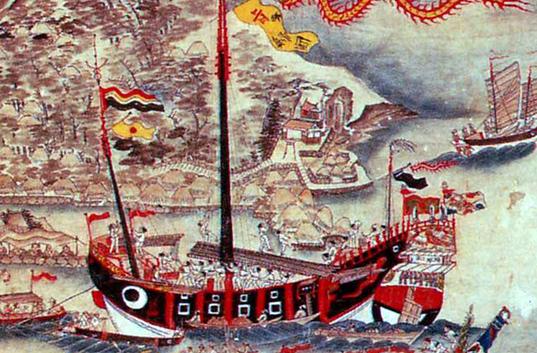
Everything goes back the old Ryukyu Kingdom Period(1392-1879) the majority of Okinawa’s Chinese community resided in Naha’s Kumemura district. Shortly after the establishment of tributary trade relations with China, a group of Chinese from Fujian were granted to Ryūkyū by the Chinese Emperor and started to immigrate to Okinawa in 1392. They came to be known as the people from the ‘36 Clans of the Min-People’ (minren sanshiliu-xing 閩人三十六姓). Min 閩 refers to the lower valley of the Min River in Fujian 福建 Province, China. They settled in a small Chinese colony in Kume village 久米村.
In those days there was a magnificent park (now known as Matsuyama Koen) located between Naminoue Beach and what is now Fukushu Garden in Naha (福州園). Much of the Chinese community gathered there to enjoy various cultural activities, including martial arts, throughout the year. With much of these people coming directly from Fujian Province it’s not surprising to learn that most of the Quanfa/Kung Fu (拳法) was southern-style, and largely Fujian-based. The style practiced was White Crane, one of the five Fujian Southerm Chaolin Boxing traditions, with very particular movements that maintained a balance between the softness and hardness.
As this specific Quanfa was not native to Okinawa, local Chinese learned, practised and taught what had been handed down within their family or community for generations. Experts who traveled between China and Okinawa, periodically influenced local sources and existing practices by visiting military officials, posted to Shuri Castle and the Chinese Embassy, body guards and security personnel, all served to inspire local Chinese enthusiasts over time.
In 1979, the Ryukyu Kingdom’s abolition took place and with it the return to its province of all the Chinese experts and bureaucrats posted for years in the place. With the annexation of these territories to mainland Japan, anti-Chinese sentiment arrived and began to grow, not being an impediment for generations of Okinawans to continue with the idea / tradition of meeting in this place to continue practicing the Quanfa that had been taught to them and experiment with different practices with the intention of improving the understanding of it.
In spite of persisting even a strong Chinese influence in what until then was practiced, gradually began to take place a unique and particular approach that directly attaches to the culture of the Uchinanchu in those moments. The first signs of some katas practiced up to our days, traversed from generation to generation but still maintaining the roots in the practices carried out during this period, can be traced back to these years.
Among the enthusiasts who gathered at Matsuyama Koen stand out among many the names of Aragaki Seishō 新垣世璋 (1840–1918), Sakiyama Kitoku (1830-1914) and Higaona Kanryo 東恩納寛量. The latter is the one who in September of 1870 and with the help of Yoshimura Udun Chomei (Aji or prince), manages to get permission to embark on the trip to Fuzhou on the pretext of going as an official translator of Okinawan bureaucracies and thus initiating the path that would lead him to be recognized until today as one of the first students of Fujian White Crane Kung Fu under the tutelage of the master Ryu Ryu Koルールーコウ (1873 – 1915)(“The History of Karate” by Morio Higaona).
RYU RYU KO(ルールーコウ) XI XIE SHIE (It remains a big unknown and there is still no consensus on whether the person who taught Higashiona Kanryu was exactly Ryu Ryu Ko)
Higashionna Kanryo 東恩納寛量 (1853 – 1915)
It should be noted that to this day there is a mantle of doubts that maintains no consensus among the men in Okinawa, about the true identity of Kanryo’s teacher. One of the evidences that supports these doubts is a monument outside the Fuzhou Gymnasium recorded that Ryu Ryu Ko, Kanryo’s Master, was a Crying Crane Kung Fu (whose main characteristic was deep breathing using the diaphragm to vocalize) grand master called Xie Chon Gxiang. In the words of Morio Higgaona sensei who was told that “Ryu Ryu Ko was a guard around 40 years old, tall, with powerful foot movements. Because of civil wars he went to many places and learned Crying Kung Fu. In the past, learning martial arts had to be covertly, which explains why his identity is a mystery today, we’ll never know exactly”.
Back in Matsuyama nowadays, vestiges connecting this story with Okinawa can still be found. Just in front of the park is the Fukushu-en Garden (or Chinese garden) and in the park itself there are monuments in honor of Higaona Kanryo 東恩納寛量, Miyagi Chogun 宮城 長順 (1988-1953) and in honor of the place where the town of Kuma village was born.
This slideshow requires JavaScript.
Fukushūen 福州園 – Okinawa, Naha
Fukushūen 福州園 – Okinawa, Naha
Fukushūen 福州園 – Okinawa, Naha
At present, many activities have been carried out to commemorate the historic good relations between both peoples.
In November 2017, on the occasion of commemorating the 20th anniversary of the “Friendly Province” treaty signed between Okinawa Prefecture and Fujian Province of China in 1997, Okinawa sent a delegation led by the governor of 73 people, including many karate masters, for a series of visits and receptions between 9 and 13 of that month.
This slideshow requires JavaScript.
——————————————————————————————————————–
Text by Diegoisshinryu – Images & Illusttations taken by the Bubishi and Seishinkan Europe













 SEISHINKAN BUDŌ SCHOOL - Älvsjö Karate & Kobudō